The Best Fluffy Pancakes recipe you will fall in love with. Full of tips and tricks to help you make the best pancakes.


Discover the flavors and traditions of Moroccan Ramadan food and learn how to recreate them at home. Moroccan cuisine is a rich blend of cultures and flavors, with a unique culinary identity that has captivated food lovers worldwide.
As the holy month of Ramadan approaches, Moroccans prepare traditional dishes that bring families and communities together.
1. Introduction
Moroccan cuisine is a sensory experience, with a rich history and diverse influences. The country’s strategic location at the crossroads of Africa, Europe, and the Middle East has shaped its culinary traditions. During Ramadan, food in Morocco during Ramadan takes center stage, with families gathering to break their fast with traditional dishes. Moroccan Ramadan food is characterized by its rich flavors, aromas, and variety of ingredients.
2. Key Ingredients & Kitchen Basics
To cook authentic Moroccan dishes, you’ll need a few essential ingredients and kitchen tools. Some of the key ingredients include spices like cumin, coriander, and cinnamon, as well as olive oil, preserved lemons, and couscous. Basic kitchen tools like a tagine pot, heavy pan, and tea pot are also necessary. If you’re new to Moroccan cooking, don’t worry – many of these ingredients and tools can be found online or in specialty stores.
Some essential spices to have in your pantry include:
– Cumin
– Coriander
– Cinnamon
– Ginger
– Turmeric
– Paprika
3. Moroccan Food Overview & Trends
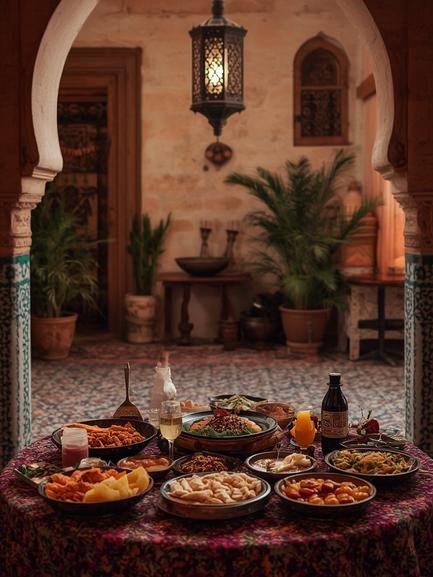 Moroccan cuisine is diverse and rich, with several main families of dishes. Tagines, couscous, street food, pastries, and salads are staples of Moroccan cuisine. Globally, Moroccan food is perceived as exotic and flavorful, with a growing interest in healthy and vegan options. Trends like fusion takes on classic recipes and modern twists on traditional dishes are also gaining popularity.
4. Step-by-Step Cooking / Recipe Guide
 Here’s a step-by-step guide to making a traditional Moroccan dish perfect for Ramadan: Harira, a hearty soup made with lentils, chickpeas, and tomatoes.
Harira Recipe:
Ingredients:
– 1 cup dried lentils
– 1 cup chickpeas
– 2 cups diced tomatoes
– 2 tablespoons olive oil
– 1 onion, diced
– 2 cloves garlic, minced
– 1 teaspoon ground cumin
– 1 teaspoon ground coriander
– 1 teaspoon paprika
– Salt and pepper, to taste
– 2 tablespoons chopped fresh parsley
– 2 tablespoons chopped fresh cilantro
Instructions:
1. Rinse the lentils and chickpeas, then soak them in water for at least 30 minutes.
2. In a large pot, heat the olive oil over medium heat. Add the onion and cook until softened.
3. Add the garlic, cumin, coriander, and paprika. Cook for 1 minute.
4. Add the diced tomatoes, lentils, chickpeas, and 4 cups of water. Bring to a boil, then reduce the heat and simmer for 30 minutes.
5. Season with salt and pepper to taste.
6. Serve hot, garnished with parsley and cilantro.
When cooking Moroccan Ramadan food, it’s essential to use fresh and high-quality ingredients. Similarly, food in Morocco during Ramadan is known for its rich flavors and aromas, which can be achieved by using a variety of spices and ingredients.
5. Serving, Pairing & Moroccan Dining Culture
In Morocco, mealtimes are sacred, and food is often served family-style. Traditional Moroccan dishes are typically served with bread, which is used to scoop up food instead of cutlery. Tea is an integral part of Moroccan culture, and is often served before, during, and after meals. When hosting international guests, consider serving a variety of small dishes, such as salads and pastries, along with the main course.
Some popular pairing options include:
– Mint tea
– Fresh fruit salad
– Grilled meats or vegetables
– Moroccan pastries, such as baklava or ghriba
6. Health, Nutrition & Dietary Adaptations
Moroccan cuisine is known for its rich flavors and aromas, but it’s also relatively healthy. Many traditional dishes are made with vegetables, legumes, and whole grains. To adapt Moroccan recipes to different diets, consider substituting ingredients or adjusting portion sizes. For example, you can make vegan versions of traditional dishes by replacing meat with plant-based protein sources.
Some tips for adapting Moroccan recipes include:
– Using vegan alternatives to meat and dairy
– Reducing salt and sugar content
– Incorporating gluten-free ingredients
– Adding more vegetables and legumes
7. Common Mistakes & How to Avoid Them
When cooking Moroccan food, it’s easy to make mistakes that can affect the flavor and texture of your dishes. Some common mistakes include overcooking, using the wrong spice balance, and adding too much liquid. To avoid these mistakes, follow recipes carefully, and don’t be afraid to experiment and adjust seasoning to taste.
Some tips for avoiding common mistakes include:
– Using a thermometer to ensure the right temperature
– Tasting and adjusting seasoning as you go
– Not overcrowding your pot or pan
– Letting your dish rest before serving
8. Future of Moroccan Cuisine Worldwide
Moroccan cuisine is gaining popularity worldwide, with a growing interest in traditional and modern Moroccan dishes. As social media continues to shape the way we discover and share food, Moroccan cuisine is likely to become even more popular. Look out for street food tours, cooking classes, and food festivals that celebrate Moroccan cuisine.
9. Conclusion
In conclusion, Moroccan Ramadan food is a reflection of the country’s rich culinary heritage. By cooking traditional Moroccan dishes, you can experience the flavors and traditions of food in Morocco during Ramadan. Whether you’re a seasoned cook or just starting out, Moroccan cuisine has something to offer.
10. FAQs
1. Is Moroccan cuisine difficult to cook for beginners?
Moroccan cuisine can be intimidating, but many dishes are relatively simple to prepare. Start with basic recipes like harira or grilled meats, and experiment with new ingredients and techniques.
2. How do I store leftover Moroccan dishes?
Most Moroccan dishes can be stored in the fridge for up to 3 days or frozen for later use. Reheat gently, adding a little water or broth if needed.
3. What are the essential spices to buy for Moroccan cooking?
Start with cumin, coriander, cinnamon, ginger, and paprika. These spices are staples of Moroccan cuisine and can be used in a variety of dishes.
4. Can I make Moroccan dishes vegan or gluten-free?
Yes, many Moroccan dishes can be adapted to suit different diets. Substitute ingredients, adjust portion sizes, and experiment with new flavors to create vegan or gluten-free versions of traditional dishes.
5. What are some popular Moroccan dishes to serve to guests?
Consider serving a variety of small dishes, such as salads, pastries, and grilled meats. Tagines, couscous, and harira are also popular options that are sure to impress.
SEO Title: Moroccan Ramadan Food 7 Essentials for an Authentic Feast
Meta Description: Discover the flavors and traditions of Moroccan Ramadan food and learn how to recreate them at home. Get 7 essentials for an authentic feast.
URL Slug: moroccan-ramadan-food-7-essentials-for-an-authentic-feast