
Discover the rich flavors of Moroccan cuisine with Hake Fillet Tagine, a dish that showcases the delicate taste of Flaky white fish in a traditional tagine pot.
1. Introduction
Moroccan cuisine is a treasure trove of flavors, blending African, Arab, and Mediterranean influences into a unique culinary experience. One of the most exciting aspects of Moroccan cooking is its emphasis on slow-cooked dishes that bring out the best in ingredients. The Hake Fillet Tagine is a perfect example, featuring Flaky white fish cooked to perfection in a rich, aromatic sauce.
2. Key Ingredients & Kitchen Basics
To cook Moroccan dishes like Hake Fillet Tagine, you’ll need some essential ingredients and tools. Key spices include cumin, coriander, ginger, and turmeric, which form the backbone of many Moroccan recipes. Other important ingredients are olive oil, preserved lemons, and fresh herbs like parsley and cilantro. For cooking, a traditional tagine pot is ideal, but a heavy pan with a lid can be used as a substitute.
3. Moroccan Food Overview & Trends
Moroccan cuisine is diverse, with main categories including tagines, couscous dishes, street food, pastries, and salads. Globally, Moroccan food is perceived as exotic and flavorful, with a growing trend towards healthier, vegan, and fusion versions of classic dishes. 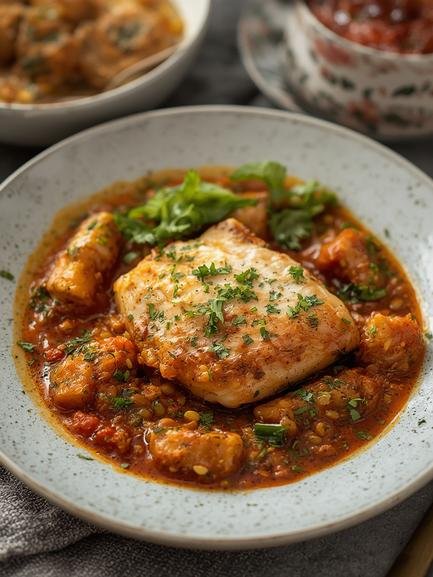 The Hake Fillet Tagine represents a traditional tagine dish that is gaining popularity worldwide.
4. Step-by-Step Cooking / Recipe Guide
To prepare Hake Fillet Tagine, start by marinating hake fillets in a mixture of olive oil, lemon juice, garlic, and Moroccan spices. Then, sauté onions, ginger, and spices in olive oil until fragrant. Add chopped tomatoes, preserved lemons, and olives, and simmer the sauce before adding the marinated hake fillets. The dish is finished with fresh herbs and served over couscous, highlighting the tender Flaky white fish.
5. Serving, Pairing & Moroccan Dining Culture
In Morocco, meals are often served family-style, with multiple dishes shared around the table. Bread is a staple, used to scoop up sauces and tagines. For the Hake Fillet Tagine, consider pairing with a side of roasted vegetables or a simple salad. Mint tea is a traditional beverage that complements the dish nicely.
6. Health, Nutrition & Dietary Adaptations
Moroccan cuisine is known for its health benefits, with a focus on fresh ingredients, herbs, and spices. To adapt Hake Fillet Tagine for different diets, consider substituting fish with tofu for a vegan version or using gluten-free spices. The dish is naturally low in salt if you limit the use of preserved lemons and olives.
7. Common Mistakes & How to Avoid Them
When cooking Moroccan tagines, common mistakes include overcooking the ingredients, using the wrong balance of spices, and adding too much liquid. To avoid these issues, monitor the cooking time closely, adjust the spice levels to taste, and use a lid to control the moisture.
8. Future of Moroccan Cuisine Worldwide
As Moroccan cuisine continues to gain popularity globally, we can expect to see more street food tours, cooking classes, and social media trends featuring traditional dishes like Hake Fillet Tagine. The fusion of Moroccan flavors with international cuisine will also be an exciting trend to watch.
9. Conclusion
In conclusion, Hake Fillet Tagine is a delicious and authentic Moroccan dish that showcases the beauty of Flaky white fish in a rich and aromatic sauce. By following the tips and recipe guide provided, you can bring a taste of Morocco into your kitchen and explore the world of Moroccan cuisine.
10. FAQs
1. How difficult are Moroccan recipes for beginners?
Moroccan recipes can be straightforward, but they often require some planning and patience due to the slow-cooking methods used.
2. How do I store leftovers of tagine dishes?
Leftovers can be stored in an airtight container in the refrigerator for up to 3 days and reheated gently.
3. What are the essential spices to buy first for Moroccan cooking?
Start with cumin, coriander, ginger, turmeric, and paprika, as these form the core of many Moroccan spice blends.
4. Are there vegetarian options in Moroccan cuisine?
Yes, Moroccan cuisine offers a variety of vegetarian dishes, including tagines made with vegetables, beans, or tofu.